news

WaPo losing workers; Pittsburgh losing an entire NEWSPAPER

As a former newspaper reporter from 1999-2011, I know layoffs happen. I managed to leave on my own terms; however, some friends didn’t, and I watched them clean out their desks and leave the office.

So, when word broke that the Washington Post laid off 300 workers, many of them journalists, I, like many other decent people, felt compassion for them, whoever they are. They have families and bills like the rest of us.

What is a bit overwrought is this notion floating around journalistic circles that reporters should never be victims of the economic laws of reality. The newspaper, like many, bleeds money: $100 million last year alone.

But because WaPo owner Jeff Bezos is a billionaire, he should essentially keep subsidizing the newspaper because reporters are precious to democracy, or something.

“If Jeff Bezos is no longer willing to invest in the mission that has defined this paper for generations and serve the millions who depend on Post journalism, then The Post deserves a steward that will,” the Washington Post Guild, a union that represents Post employees, said on X.

I didn’t hear these same journalists lamenting Amazon (owned by Bezos) laying off 16,000 people last month. Bezos is a multi-billionaire and could probably subsidize the salaries and benefits for the 16,000 unfortunate folks. Did the Post run an editorial demanding that?

Also, did you know that the Pittsburgh Post-Gazette is closing entirely in a few months? I didn’t until I heard someone on television say it in passing. I’m sure whoever owns the PPG is a millionaire. Maybe he/she should’ve just sucked up the losses and kept throwing money into a losing venture.

But that’s not realistic. Newspapers aren’t the US Post Office, which loses millions of dollars a year, into the billions, and is subsidized by the government. If the government had to operate by reality’s rules and not get to print money, the USPS would’ve been nixed long ago.

So, what makes newspapers so special? Public polling routinely shows that our trust in the media is at record lows. Trust me, 99.9% of the country will quickly recover from the WaPo no longer having a sports section. And unlike the PPG, the WaPo will continue to exist, at least for the foreseeable future. Hopefully, the paper will figure out how to turn a profit; otherwise, the future’s looking pretty bleak.
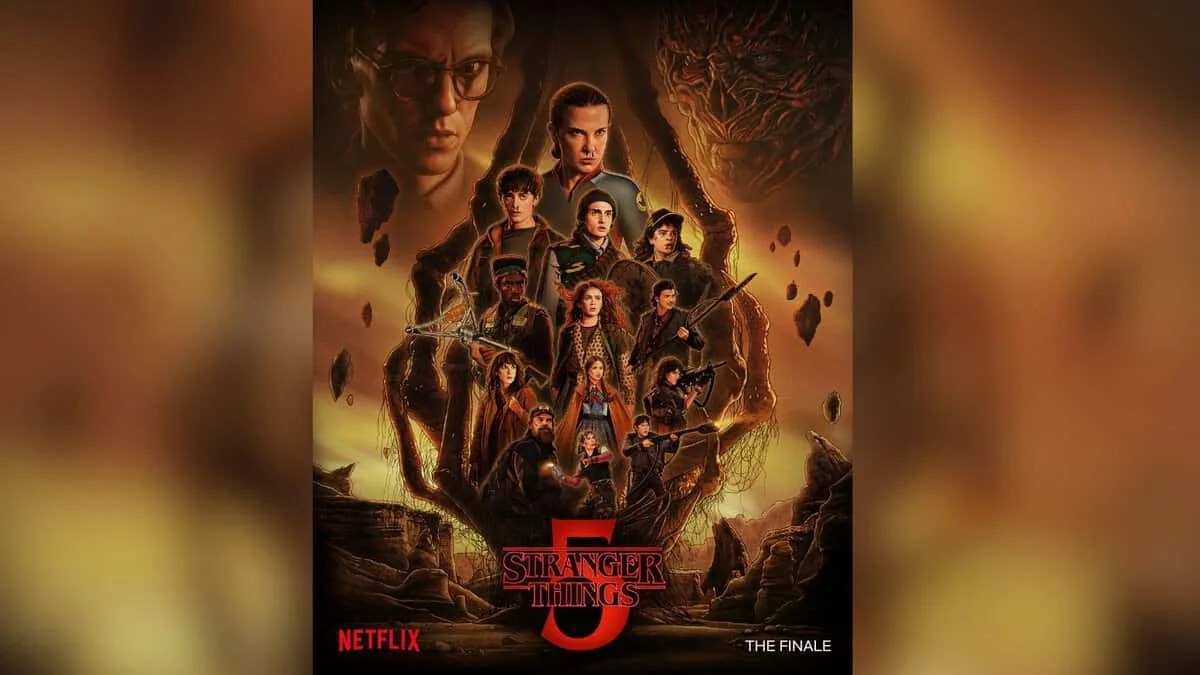
Stranger Things Series Finale: The Neverending Story

Netflix’s now-concluded Stranger Things took many children of the 1980s on a nostalgic trip to a decade of ugly sweaters, big hair, and spider-like monsters. Born in 1975, I remember the first two but not the latter. I guess it’s a Hawkins, Indiana, thing.

Most of you reading know what the series is about, so I won’t get into it. Reviews about online about how good (or bad) the series finale was. Titled “The Rightside Up,” you didn’t watch the two-hour plus episode so much as endure it, inevitably leading to you asking to nobody in particular, “When is this going to end?” Much the way many people did while watching Lord of the Rings: The Return of the King, leaving the theater with five-o’clock shadow when you entered it clean-shaven.

Now, I don’t take these TV shows seriously. None of Stranger Things made any particular sense to me, but it entertained and that’s all I ask. People much nerdier than are picking the episode, and series, apart becase it didn’t end the way they wanted it to end. Go out and make your own nonsensical show, if that’s the case. But here’s what bewildered me about the finale (spoilers ahead):

  1. The military just let everyone in the Hawkins crew go after several of them murdered US soldiers? That’s right, Hopper, especially, shot and killed multiple men in uniform. Eleven snapped a bunch of their necks, and Murray blew up a helicopter, presumably killing everyone on board. Linda Hamilton’s evil military character basically just vanishes. What happened to her beside smoking even more cigarettes? All of that went unanswered. Despite the Hawkins’s party heroically saving the world, I’m positive some of them committed a few felonies along the way. And, what, the US government says, eh, whatever, you can go home now? Maybe the military was like, “we did some bad stuff, too, like kidnapping children and using them as Mengele-esque test subjects, so it all evens out in the end.” I’m still scratching my head over that.
  2. The big scary spider monster was way too easy to defeat. Yes, the brave party fights and kills the proverbial dragon at the end of the show. This happens both inside the spider with Eleven battling Vecna, and outside with everyone else shooting up the spider-like vessel that’s linked to Vecna. Kill one, kill both, or something like that. Nancy points the party to the tippy-tops of nearby mountains and commands them to attack the best from above! And just like that, they’re on top of the rocks! You have to climb the mountain first! How the hell did they get up there so fast? Whatever the case may be, the spider–easily the size of several city blocks and as tall as Nakatomi Plaza–folded after a Nancy shoots it with a machine gun. We’re talking a kaiju-sized abomination with what would have to be a thick hide dying to bullets that would be the size of amoebas to it. Nancy had help with party members dousing it with flame-throwers and lobbing explosives at it, but if this is the end of the video game, the final boss should not collapse like a Jenga tower at the hands of an excited toddler.
  3. The four main boys–Dustin, Lucas, Will and Mike–graduate high school and are almost immediately invited to a party hosted by the hottest girl in the school. And they opt to play Dungeons & Dragons instead? Come on! I get it, that’s how we’re introduced to them in season one. But they’re all 18 now and have the opportunity to hang out with actual young women (and in Will’s case, young men). Nah, forget that, let’s hang out in a basement brimming with body odor and radon and throw a bunch of mishapen dice on the table while Mike makes up some nonsense about goblins.
  4. Eleven is alive? I don’t know. Mike gives a somewhat plausible explanation as to why. But let’s say she is alive. We’re talking about an emotionally unstable girl who never graduated high school and who massively distrusts authority after being expiremented upon in ghastly ways. How does she support herself? I sincerely doubt she’s wandering around a beautiful valley with roaring waterfalls, the way Mike imagines it. Can she even fill out a job application? I pray she’s not turning tricks in Indianapolis, or committing petty theft just to get by. We could use a little more clarity on that one.

So, those were a few things that stood out to me. The vaunted Duffer Brothers, who created the show, set up a possible sequel in that universe when Holly Wheeler and some of her young friends gather around the Dungeons & Dragon table and start playing. What, are we going back to the nostalgic 1990s now, with references to grunge bands, the Whitewater scandal (which nobody understands), and Newt Gingrich tussling with Bill Clinton? I got news for you: Dungeons & Dragons wasn’t a thing in the 1990s. Magic: The Gathering was. And the last thing I want is another group of kids warding off a stand-in for a Shivan Dragon or Two-Headed Giant while the government conducts more dastardly experiments on people. Gues what else started in the 1990s? Moveon.org. We can only hope.